· 6 min de leitura
Why Customers Abandon Loyalty Programmes (and How to Prevent It)
Discover the 7 concrete reasons customers abandon loyalty programmes — and what to do to maintain long-term engagement.
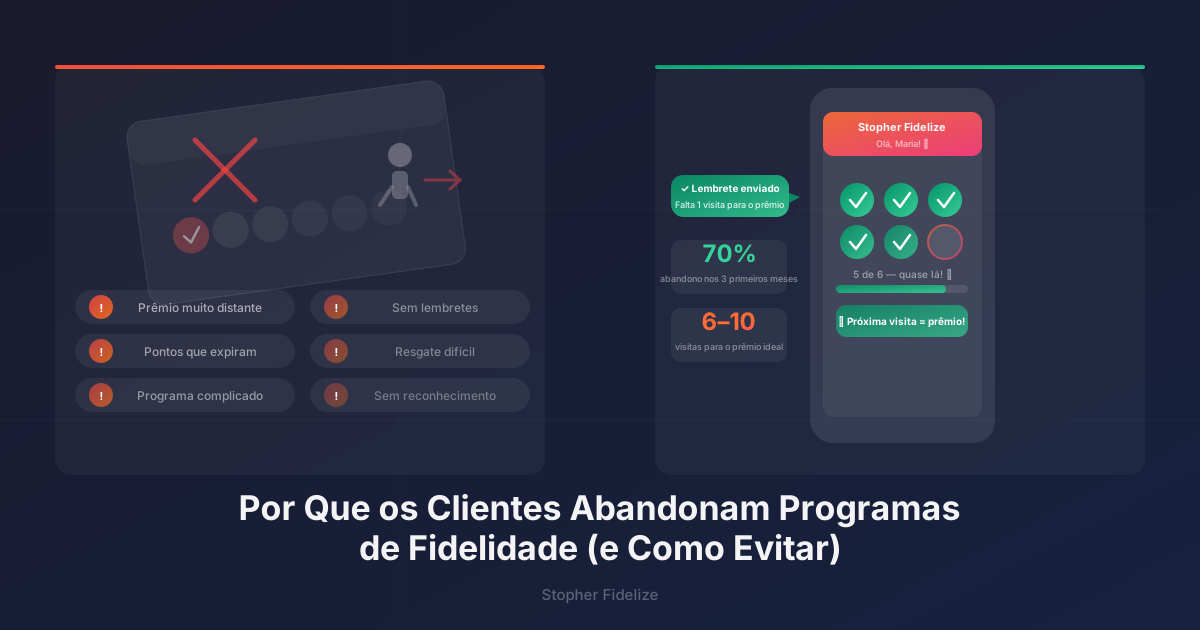
Creating a loyalty programme is the easy part. The real challenge is keeping customers engaged beyond the second or third visit. Most loyalty programmes lose between 60% and 70% of participants within the first 3 months — not from lack of interest, but for concrete, avoidable reasons. Knowing those reasons is the first step to building a programme customers do not want to leave.
Reason 1 — The reward takes too long to reach
This is the number one reason. When a customer realises they need 20, 30 or 40 visits to earn something, motivation disappears quickly. The human brain responds to short reward cycles — the further away the reward, the easier it is to give up halfway. The practical rule: the reward must be reachable in no more than 6 to 10 visits. If your business has a naturally lower purchase frequency, adjust the number of visits or offer intermediate rewards to maintain engagement.
Reason 2 — Points expire without warning
Discovering that all accumulated points have expired is one of the most frustrating experiences a customer can have. It feels like a betrayal — the customer invested visits and money, and it was all lost without anyone warning them. If your programme has an expiry date on points, communicate it well in advance. A reminder sent 30 days before expiry, followed by another 7 days before, turns a negative experience into a reactivation opportunity.
Reason 3 — The programme is hard to follow
The customer doesn't know how many points they have. They don't know what they need for the next reward. They don't know if they're close or far away. This opacity is lethal for engagement. A digital loyalty programme solves this by showing an updated balance whenever the customer wants to check — on their phone, in seconds. Progress visibility is one of the strongest motivators to keep participating.
Reason 4 — The rewards have no value for the customer
Offering a gift the customer doesn't want is worse than offering nothing — because the customer invested time and visits expecting something that never came. Know your customers. What do they buy most often? What do they comment on? What do they ask for? The ideal reward is something the customer already wanted to buy but now receives for free. This creates a feeling of real gain, not symbolic recognition.
Reason 5 — The customer forgets the programme exists
A loyalty programme that does not communicate actively becomes invisible. The customer visits the business, makes a purchase, leaves — and never once remembers they have points to collect. Consistent communication is essential: a post-visit reminder with the updated balance, a message when they are close to a reward, a note on their birthday. These simple touches keep the programme alive in the customer's mind.
Reason 6 — The redemption experience is complicated
The customer reaches the reward — and when it comes to redeeming it, they find friction. They need to show the physical card they left at home. They need to call a number. They need to fill out a form. Every obstacle at the moment of redemption reduces the pleasure of the reward and increases the likelihood of the customer not participating again. Redemption should be as simple as earning: a QR code, one click, a phone number.
Reason 7 — The programme does not recognise the most loyal customers
The customer who visits the business three times a week receives the same treatment as someone who shows up once a month. No special mention, no recognition, no extra benefit. Over time, that customer starts to wonder why they bother being so loyal when there is no noticeable difference. Recognising your most frequent customers — even if it is just a "thank you for always being here" — has an enormous impact on long-term loyalty.
The good news is that all these reasons have solutions. And most solutions do not require more resources or more time — they require a system that does the work automatically: shows progress, sends reminders, makes redemption easy, and recognises those who deserve it. A well-configured digital loyalty programme does all of this on autopilot.