· 7 min de leitura
Restaurant Loyalty Programme: The Complete Guide
A complete guide to building a restaurant loyalty programme: reward model, customer communication and how to measure the return.
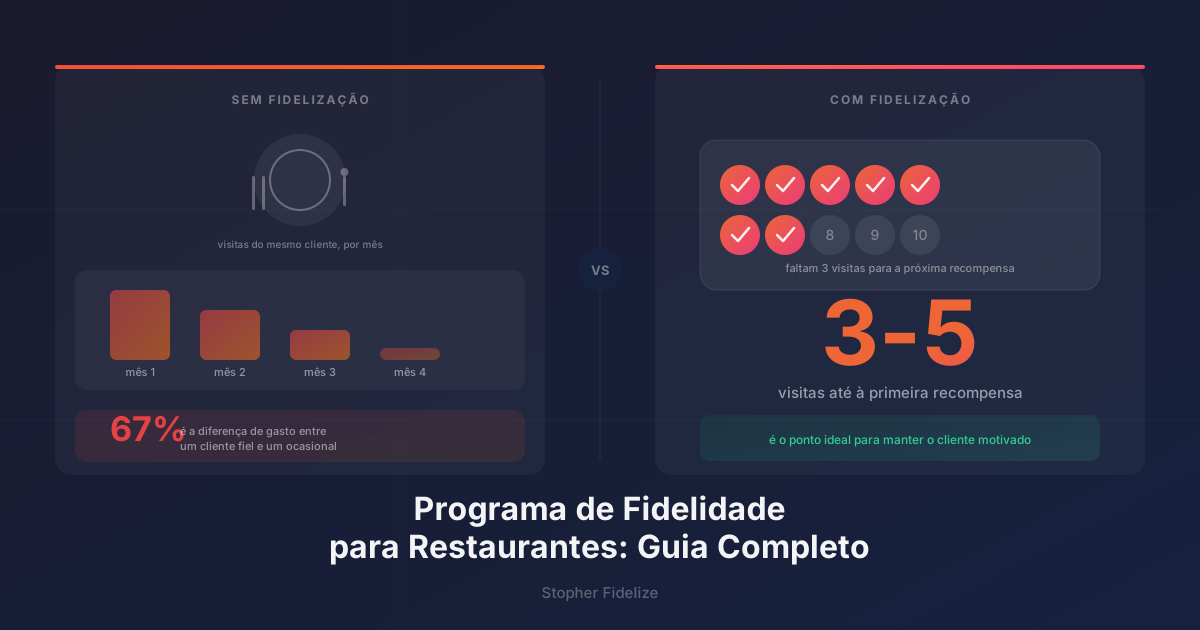
A restaurant lives on repetition. The dish can be excellent on the first visit, but the business only holds up when that customer comes back a second, third and tenth time. That is where a well-designed loyalty programme makes the difference between a restaurant that fills the room with new customers every month at rising cost, and one that builds a loyal base that keeps tables full even on slower days. This guide walks through, step by step, how to build a loyalty programme for a restaurant — from choosing the reward model to communicating it to customers.
Why restaurants need loyalty more than most businesses
Restaurants have a particular trait: the decision of where to eat gets made several times a week, and the competition is literally next door. A customer who feels no connection to a restaurant chooses based on price, convenience or mood. Industry studies show loyal customers spend, on average, 67% more than new customers and visit more often. For a restaurant with an average ticket of €18, a customer moving from occasional visits to weekly visits can represent over €900 in additional revenue a year — just from feeling recognised and rewarded.
Stamp card or points? Choosing the right model
The stamp card model (buy 10, get the 11th free) works well for quick-service restaurants or cafés, where the purchase decision is simple and the reward value is clear from the start. The points-per-euro-spent model suits restaurants with a varied menu and different average tickets between lunch and dinner, since it rewards higher spenders proportionally. A practical rule: if the menu has fewer than 15 items at similar prices, go with stamps; if there is a wide price range across starters, mains and group menus, go with points. The most common mistake is copying another business's model without considering your own pricing structure.
Set a reward that actually brings customers back
The right reward has to be desirable yet sustainable for the restaurant's margin. A free dessert or starter usually costs the restaurant between €1.50 and €3, but is perceived by the customer as a much higher-value gesture — making it more effective than a direct cash discount. Avoid rewards that require customers to spend far more than usual to unlock them: if the average ticket is €20 and the reward only kicks in at €150, most customers will give up before completing the cycle. Ideally, the first reward should be reachable within 3 to 5 visits.
The highest-impact moments: lunch, dinner and special occasions
A loyalty programme does not need to treat every visit the same way. Restaurants with slow Tuesdays and Wednesdays can offer double points on those days to even out occupancy across the week — a technique well-known venues use to turn their weakest days into their busiest ones. Similarly, birthdays are a strong reactivation opportunity: an automatic message with a bonus of points or a special offer during the customer's birthday month generates far higher return rates than any generic marketing campaign.
How to communicate the programme without annoying customers
Sign-up to a loyalty programme happens, most often, at the moment of payment — that is when staff should naturally ask: "Do you have our loyalty card yet? We can sign you up here." Signage at the entrance and QR codes on tables reinforce the message without relying solely on staff remembering to mention it. After the first sign-up, communication should continue through push notifications or SMS — it should never depend on the customer remembering to open an app on their own. The goal is for the customer to always know how many points they have and what is left for the next reward, without having to ask.
Common mistakes that cancel out the programme's effect
The most frequent mistake is launching the programme and then never communicating about it again — after the staff's initial enthusiasm fades, sign-ups stall. Another mistake is making registration slow or bureaucratic: if the customer has to fill in a long form or download a heavy app just to earn the first stamp, most will give up at the counter. Finally, many restaurants design attractive rewards but forget to track the data — without knowing how many customers are active, how many dropped out mid-cycle, and which reward is redeemed most, it is impossible to adjust the programme, and it loses relevance within a few months.
Measuring the return: the numbers that actually matter
Three indicators show whether the programme is working: the repeat-visit rate (how many customers return within 30 days), the average ticket of loyal customers versus occasional ones, and the reward redemption rate (if nobody redeems, the reward is misaligned with the effort required). A digital loyalty programme records this data automatically on every visit, allowing month-to-month comparisons without relying on estimates or floor staff memory.
A loyalty programme for a restaurant is not a one-off marketing tool — it is part of the operation, just as important as reservation management or stock control. Restaurants that treat loyalty with that level of seriousness build a customer base that sustains the business even when competition opens next door.